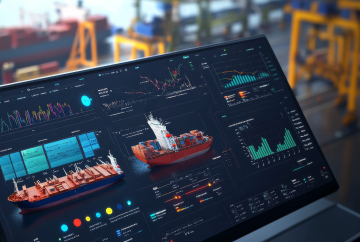

AI-driven aftermarket parts pricing strategy analyses a lot of data, such as market trends, customer behaviour, and competitor pricing, to predict demand and adjust prices in real-time.
The goal is to up the Revenues, improving customer satisfaction, and offering the right price at the right time.
This involves considering the stock levels, the costs of supply chain, and the rules and legislation that govern the organization.
Manufacturing changes so quickly; it is becoming increasingly vital to employ artificial intelligence (AI) to set prices for aftermarket parts. Manufacturers utilize AI to improve their pricing strategies to stay profitable and keep consumers pleased as competition develops and customer expectations rise.
This article details how AI is changing the prices of aftermarket parts, the challenges of using it, the standard ML algorithms used to make such a solution, and what the future holds for this technology in the manufacturing industry.
Why It is Important to Price Aftermarket Parts
Aftermarket parts make manufacturers a lot of money. Parts Pricing need to be set correctly to stay competitive and maintain profits. Earlier, the prices of parts were based on either cost-plus models or prices set by competitors. These models ignore more dynamic factors like Inventory at hand, customers willingness to pay and market evolution. With rising e-commerce and real-time price visibility, 65 % of aftermarket executives predict margin compression in the near term, underscoring the need for advanced pricing tools like AI and ML.
AI uses data points (both in-house and externally sourced) to create pricing plans that align with the company's goals and the market's needs, effectively addressing the problem.
The industry surveys by McKinsey & Company show that over 88 % of firms now use AI in one or more business functions, illustrating broad enterprise adoption and laying the groundwork for AI-enabled pricing strategies.
How AI Changes the Cost of Parts
AI systems employ machine learning algorithms that consider customer behaviour, previous sales, market information, and competitor prices. This enables quick price changes, uses predictive analytics for future pricing, and studies price movements with price points.
Let’s look at the ways AI helps in predicting dynamic parts pricing:
- Dynamic Pricing: Market conditions change quite fast. AI can help adjust the Parts pricing based on market demand, Parts seasonality etc. resulting in maximizing the Profits and elevated customer experience.
- Predictive Analytics: AI examines historical data to predict upcoming price trends. This allows businesses to prepare for changes in demand and adjust their prices. This predictive capability helps companies avoid unexpected challenges when the market shifts quickly.
- Segmentation: AI systems can group clients based on their sensitivity to price changes, their past buying behaviour, and their shopping habits. This segmentation allows businesses to set different prices for different customers. As a result, it increases sales and profits.
Challenges with AI for Pricing
Using AI to set prices for aftermarket items comes with it’s own advantages and disadvantages. Manufacturers must address a few challenges before fully utilizing AI's skills.
- Data Quality & Quantity
AI systems need a lot of good data to work well. Many manufacturers have trouble with data that is old, split up, or has poor data quality. It is very important that data is always correct and up to date for AI systems to work. ML algorithms accuracy will depend on the clean underlying data used for training purposes. - Change Management
When you migrate from conventional pricing approaches to AI-driven ones, a lot of change management needs to happen. People need to learn to trust and understand what AI tools say. Also, how things are done must be altered so that AI tools can work with them. - Technological Integration
It might be difficult and expensive to add AI to existing IT systems. Manufacturers need to ensure that their infrastructure can handle AI technologies. This could require making significant changes to outdated systems or starting from scratch. - Ethical & Regulatory considerations
When AI sets prices, there need to be rules to prevent price manipulation and discrimination. Companies that create goods must also consider the ethical issues related to AI and ensure their prices are fair and easy to understand.
The Race
The world of AI pricing for spare parts is moving fast. Lots of companies are trying different stuff to make it work. Deloitte notes that manufacturers are prioritizing agentic AI—capable of autonomous planning and decision support—to improve operations and aftermarket customer experience. A survey showed that 70% of the top 100 manufacturers around the globe are either using AI to set prices or plan to within in short term.
Suppliers are also crucial for making AI pricing work for spare parts. Companies like SAP, Oracle, and Infor offer AI pricing technology that seamlessly integrates with existing ERP (Enterprise Resource Planning) systems. These solutions provide real-time pricing analytics, automated price optimization, and predictive modelling capabilities, enabling manufacturers to make data-driven pricing decisions.
Some companies / startups offer cloud-based pricing systems that use AI and machine learning to find the best prices for parts the original manufacturer does not make. Increasingly, small and medium-sized manufacturers are using these solutions because they are cost-effective and are scalable pricing solutions.
The adoption rates of AI-driven aftermarket parts pricing vary across the industries; automotive and aerospace sectors are leading the way. According to a report by Research and Markets, the Aftermarket Automotive Parts Market is valued at USD 482.35 billion in 2025 and is expected to reach USD 619.25 billion by 2029, growing at a 6.4 % CAGR. The aerospace industry is also witnessing significant growth. Companies like Boeing and Airbus have implemented AI-powered pricing solutions to optimize their aftermarket parts pricing. As the competitive landscape continues to evolve, manufacturers and suppliers will need to stay agile and adapt to changing market conditions to remain competitive.
A number of businesses have utilized AI to determine prices for aftermarket parts with great success. AI was used, for example, by a large automaker to increase the price of its aftermarket parts. Sales increased 15%+ as a result, and holding costs for inventory were observed to be slashing by up-to 20%. Another example would be the company that produces heavy machinery. It uses machine learning techniques for price setting and demand forecasting. This is observed to result in approx. 10% increase in sales and a approx. 15% drop in pricing errors. These examples demonstrate how companies can maximize profits and grow by using AI.
The competitive landscape of AI-driven aftermarket parts pricing is characterized by rapid adoption, innovation, and competition. Leading manufacturers and suppliers are leveraging AI and machine learning to optimize their aftermarket parts pricing, resulting in significant revenue increases and improved profitability. With continuous market evolution, companies will need to stay focused on delivering customer value, investing in digital transformation, and developing strategic partnerships to remain competitive.
The Future of AI in Pricing Non-OEM Parts
In the next few years, AI will play a significant role in setting the prices of aftermarket products. We can expect AI models to improve as technology advances. These models will manage more complex pricing situations and integrate well with other organizational tasks, such as managing inventories and helping customers. Companies that can tackle the initial challenges with AI will likely gain a decisive advantage over their competitors.